
Support Groups and Healing Services
Our healing services include support groups, workshops, counseling, children’s services, and case management. Advocates help survivors and their families connect with support that fits their needs and priorities.

Cost
Free
Eligibility
Survivors who have worked with an Advocate and our intake process
Covering
Santa Clara County
Language
English and Spanish; interpretation in all other languages available
Options
Counseling, support groups, child and youth resources, and advocacy
Peaceful Contact Workshops
Peaceful Contact is a modification to a Criminal Protective Order that allows contact between the restrained and protected person as long as the contact remains peaceful.
NDS offers free weekly virtual workshops in English and Spanish with information about the Peaceful Contact process and how to request a modification.
English: Fridays at 12:00 PM
Español: Mondays at 3:30 PM
Support Group Schedule
What the Process Looks Like
Start by calling the hotline or community office, or email info@nextdoor.org. An advocate can learn what kind of support would be useful, explain current groups and services, and help with referrals or enrollment. Some services may have eligibility, scheduling, or availability requirements.
Our Approach
Our healing services are survivor-centered, trauma-informed, culturally responsive, and grounded in survivor choice. People can seek support while remaining in a relationship, after leaving, or long after a crisis. An advocate can help with safety planning and identifying a support group that fits your needs and interests. We recognize that healing is connected to safety, housing, income, parenting, health, culture, and community.
Support Groups
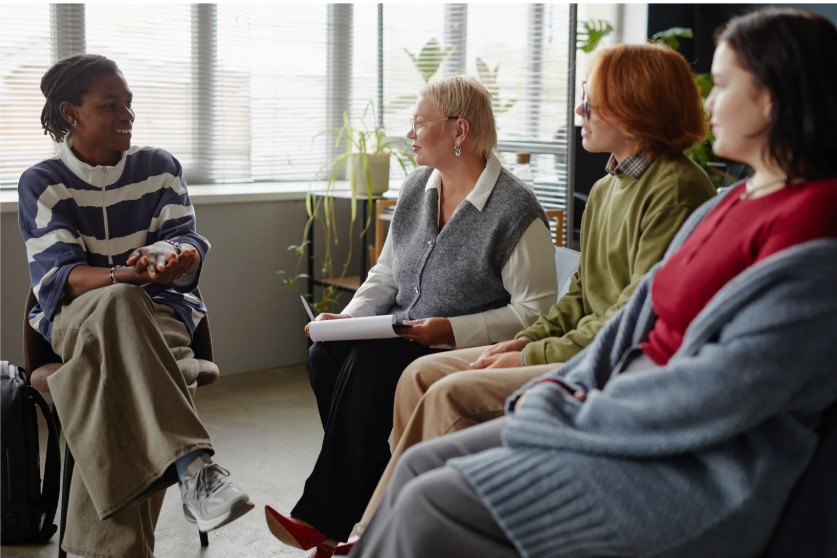
Support groups offer survivors a place to connect with others, share experiences, and build skills for healing and daily life. NDS offers groups for women, men, LGBTQIAP+ survivors, and young people, Translation is available in English and Spanish. Groups explore topics such as safety, healthy relationships, self-care, communication, parenting, and personal goals.
General Domestic Violence Support Groups
These groups focus on resilience, self-esteem, self-care, and personal growth. Depending on the group, participants may also explore practical topics such as health care, employment, budgeting, housing, education, and nutrition.
LGBTQIAP+ Support Group
This virtual group offers LGBTQIAP+ survivors a welcoming space to build community and discuss the dynamics of intimate partner violence, safety planning, boundaries, communication, and self-care. Survivors of all genders are welcome, regardless of the gender of their current or former partners.
Men’s Support Group
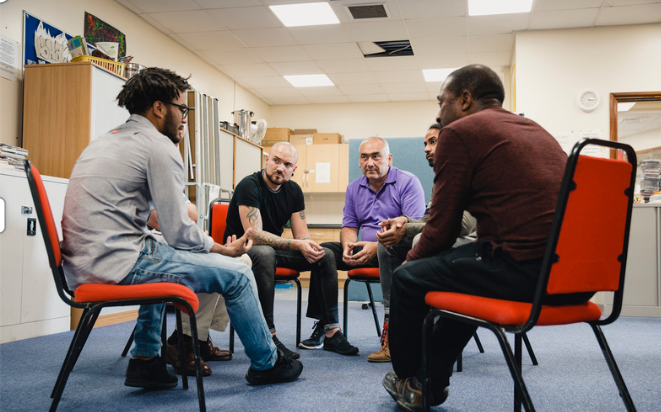
Men who have experienced domestic violence can connect with others while exploring healthy relationships, communication, self-care, stress management, and healing. This group is virtual.
Teen Support Group
For young people ages 10–18, this group provides space to express themselves and learn about healthy relationships, boundaries, communication, conflict resolution, self-esteem, and managing stress.
Quilting Support Group
Through a partnership with the San Jose Museum of Quilts & Textiles and the Santa Clara Valley Quilt Association, participants create a quilt of their own while learning new skills and connecting with others. No sewing experience is needed, and materials are provided.
Kids Club
Kids Club provides children ages 3–17 with a welcoming place to take part in art, reading, storytelling, homework help, and other activities while their parent participates in NDS services.
Throughout the year, NDS and community partners also offer workshops on topics such as education, financial skills, and career development.
Interested in joining a group? First-time participants complete an intake and orientation before attending. Call our 24/7 hotline at (408) 279-2962 or our front desk at (408) 501-7550, Monday–Friday, 9 a.m.–5 p.m., to ask about current groups and get started. View the support group calendar.
Workshops
Our workshops include Peaceful Contact and Parenting After Violence. Learn more about each workshop and how to participate.
Case Management
Case management provides ongoing support for survivors and their families as they address immediate concerns and longer-term needs. Advocates assist with safety planning, connecting to services and resources, and identifying next steps based on each survivor’s priorities.
Support Groups and Healing Services
Services support connection, healing, practical problem-solving, and longer-term stability. Availability and formats may vary.
Support Groups
Connection, information, and shared learning in a confidential setting.
NDS offers in-person and online groups based on current capacity, language, and community needs.
Counseling and Therapy
Individual support focused on healing and well-being.
Qualified providers offer trauma-informed counseling or therapy based on current program availability.
Child and Youth Services
Age-appropriate support for children and youth
Services include Kids Club, youth activities, family support, safety planning, and connections to school, childcare, counseling, or other resources.
We’re Here to Help
You do not have to be certain that what you are experiencing is abuse, and you do not have to know what you want to do next. A trained advocate can listen, help you assess safety, and talk through options without judgment or pressure.
If you are in immediate danger, call 911.

24/7 Hotline
Call (408) 279-2962. A trained advocate answers every hour of every day for crisis support, safety planning, information, shelter screening, and referrals.

Safe Chat
Chat online with a trained advocate during Safe Chat hours. Remember that browser and device activity may still be visible to someone with access.

Language Access
Services are available in English and Spanish, and interpretation can be arranged in other languages.

Community Office
1400 Parkmoor Ave., Suite 120, San Jose, CA 95126. Open Monday–Friday, 9am–5pm. Closed weekends and holidays. Call (408) 501-7550.
FAQs
Clear answers to common questions. You can also contact us directly for support or more information.
Yes. Next Door Solutions does not charge survivors for services.
No. You can receive support while in a relationship, after leaving, or while deciding what you want.
Formats depend on the current group.
Yes, when a current program fits their age and needs. Advocates can explain available children’s and family services.
Yes.
Other Ways We Help Survivors of Intimate Partner Violence
Every situation is different. Our trained and experienced advocates listen, create safety plans, help identify options, and connect people with the support and resources they need.

Immediate Help
A 24/7 hotline, walk-in help, Safe Chat, safety planning, risk assessment, shelter screening, crisis advocacy, information, and referrals.
Housing and Legal Services
Emergency shelter, housing advocacy, homelessness prevention, restraining-order support, court preparation, legal information, and referrals.

Violence Prevention, Education, and Systems Change
Community education, youth prevention, healthcare partnerships, outreach, training, and systems change strengthen community responses to intimate partner violence.